Crochet, knitting, astronomy & life in general.

Thursday, August 18, 2011

I'm a Red Hat Society Wanna-be


Warning
by Jenny Joseph

When I am an old woman I shall wear purple
With a red hat which doesn't go, and doesn't suit me.
And I shall spend my pension on brandy and summer gloves
And satin sandals, and say we've no money for butter.
I shall sit down on the pavement when I'm tired
And gobble up samples in shops and press alarm bells
And run my stick along the public railings
And make up for the sobriety of my youth.
I shall go out in my slippers in the rain
And pick flowers in other people's gardens
And learn to spit.

You can wear terrible shirts and grow more fat
And eat three pounds of sausages at a go
Or only bread and pickle for a week
And hoard pens and pencils and beermats and things in boxes.

But now we must have clothes that keep us dry
And pay our rent and not swear in the street
And set a good example for the children.
We must have friends to dinner and read the papers.

But maybe I ought to practice a little now?
So people who know me are not too shocked and surprised
When suddenly I am old, and start to wear purple.


The Red Hat Society is a group that encourages women "to pursue fun, friendship, freedom, fulfillment of lifelong dreams and fitness". Essentially, it's a big social club for women, but also a support network. It was started in 1997 by Sue Cooper, who was inspired by the above poem to give her friend a red hat, along with a copy of the poem. Her friend liked it so much, that Sue was inspired to repeat the gift with several of her friends, and before she knew it, it became a worldwide club. The red-hatters distinguish themselves by going out in public with red hats and purple dresses and having way too much fun.


I'm not old enough to join the Red Hat Society (you have to be 50 or over to join), but until then, I can wear a ridiculous red hat of my own in their honour. My first felted project was this Foxy Felted Cloche (Ravelry link) by glitteratti. Unfelted, of course, it was HUGE, but after a good scrub in the sink with alternating hot and cold water, it shrunk up nicely (and filled my drain with wool fuzz). The yarn is Brown Sheep Lamb's Pride Worsted, which felts up really well.


To bling it up, I crocheted and felted the flower from this Lion Brand pattern and attached it to the hat with a brooch I found in my jewelry collection. I also edged it with ribbon I bought at Mokuba on Queen Street West here in Toronto. It's a store devoted entirely to ribbons and trim. Amazing.

This hat, however, is a testament to how long it takes me to finish things. It only took me a day to do the actual knitting, but then it was a month before I got around to felting it, and at least another month before I sewed the flower and ribbon on. I'll probably do another felted project someday, but I have to work on motivating myself to do the finishing steps after the knitting is done!

Saturday, August 13, 2011

Double-knit Potholders: Now Officially a Wedding Tradition

I recently returned from the Eastern Townships where some very awesome friends of mine got hitched. They did the deed in the most beautiful place on Earth, Baldwin Mills (I took some pictures last summer). I'm not joking. This is what I woke up to the day after the wedding:


The ceremony was beautiful (partly because I was asked to play violin at the last minute), the dinner was delicious (there was a whole roast lamb), the booze was plentiful (there was a bathtub of beer), and the party was incredibly fun. Those Baldwins sure do know how to get married. Anyway, as has become a tradition for me (see here, here, and here), I made the couple some double-knit potholders as a wedding present.


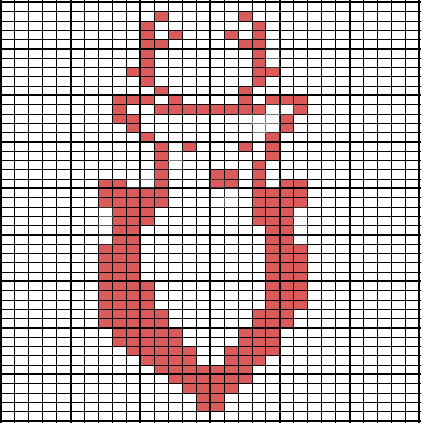
As usual, I tried to make the designs representative of the couple. The pixelated deer on the left is from the groom's now very successful game Sword & Sworcery. The mounted deer head on the right has become the couple's personal logo. They even used it on the wine bottles at the wedding.


If you feel like knitting Sword & Sworcery deer or Dead Deer potholders of your own, here are the charts for both designs (click for larger size):


Speaking of double-knitting, I've written a tutorial for making your own double-knit fabric over on the Happy Seamstress. You should check it out!

Tuesday, August 9, 2011

Lemon skewers

I think it's become apparent that I am, indeed, a sock knitter. It was only a matter of time before I tried this fabled "magic-loop technique" for knitting socks toe-up, two at a time. And of course, I can never pass up a cleverly-constructed garment. So, when I saw the Skew pattern by Lana Holden from Knitty's Winter 2009 issue, I knew I was just going to have to knit it.


The construction is especially interesting because it's knit on a bias. This makes for a very cool-looking fabric, even more so when knit with a variegated yarn. I found, however, that this made modifying the sock to better fit my feet a bit more of a challenge, especially since I have wide feet, ankles and calves. In fact, I wanted to use up all of the yarn, so I made these mid-calf length, and figuring out the increases for the calves was super annoying. Even more annoying is the fact that they're still a little tight.


The yarn I used was Lion Brand's Sock-Ease, which I must admit I'm not entirely happy with. The colours are super fun, but it feels kind of scratchy, and even after a good washing, the socks are still a little itchy when I wear them. On the other hand, it does feel really sturdy.


I shouldn't sound like I totally don't like these socks though. The toe and heel construction totally baffled me at first, and I didn't really understand them until I was actually knitting them. It was one of those "just trust the pattern" instances. I had a wonderful Aha! moment when the heel magically folded into place. And the heel actually fits really well. It's nice and snug around the ankle where it might otherwise slip down my foot.

All in all, it's a very clever pattern that I'm glad I tried out, but that I probably won't work again.

Thursday, July 21, 2011

Stitch 'n Pitch 2011

Last night I went to the Stitch 'n Pitch with some of my knitting friends. It was an evening of overpriced beer and snacks, sweltering heat in the stadium (sticky legs on plastic chairs!), lots of knitters, lots of knitting (and a little crochet), knitting goody bags, and... oh yeah, I guess a baseball game was going on. The following picture, provided by SeekUp, pretty much sums it up:


I didn't bring my camera, but the pictures from last year's game are still fairly accurate, except we had a group of 7 knitters and one crocheter this year. The Jays beat the Seattle Mariners 11-6.

Tuesday, July 19, 2011

My Magnum Opus or The Cardigan That Almost Killed Me

Sometimes you just need a project that tests every knitterly skill you have. A project that takes you months, and where you utter more curse-words than would be appropriate in polite company. A project that you know will look amazing in the end, but along the way makes you wonder if it's worth it... And oh, it's worth it. As Brenda Dayne puts it, it's your Magnum Opus.

Mine has been the Emma cardigan, designed by Janine Le Cras. It is easily the best thing I have ever knit.


It started off innocently enough, with 630 yards of the lightest yarn I've ever used, Fantastic Knitting Zephyr Laceweight. The top begun with a provisional cast-on and some eyelet lace... simple enough, but once I got to the lower lace portion... well, let's just say that that's when the cursing really started.


Each row is a lace row (knitted lace as opposed to lace knitting) with no plain purl row between, and the stitch count was at way over 200 stitches, and so it took me about an hour to complete each row. It was full of p2togtbls and other such stitches... but begrudgingly, I must admit that the result is well worth the trouble. Blocked, it became the drapiest, most beautiful piece of fabric I've ever created.


By the time I got to the sleeves, I was running dangerously low on yarn. Instead of the big puffy sleeves in the pattern, I went instead with capped sleeves finished with eyelets through which I put an elastic ribbon. These were achieved by picking up the same number of stitches as in the pattern and doing the same short-row shaping without the increases between the short rows. I also only had 32 stitches between the short rows. After knitting the edging around the neck and the button band, I had 0.4 grams of the yarn left, so it's probably a good thing that I didn't go any farther with the sleeves.

My one small regret is that I didn't quite make the upper portion of the cardigan long enough. I was hoping that I'd be able to use it to modestly cover my bosom when wearing a low-cut dress, but in order to have the ribbon go under my bust, I have to rearrange my bust so that there's major cleavage going on. Oh well, it's a flaw I can live with. Everything else about the cardigan I love... The buttons are perfect, I adore the capped sleeves and that lace... oh that lace...

Friday, July 15, 2011

Prize-Winning Lemon Poppy-Seed Muffins

Every now and then I go through my picture folders and I find something I really should have blogged about ages ago. This morning, I found some photographs of some very tasty muffins I made way back in March for the department muffin competition. There were a lot of very delicious entries, including some fantastic zucchini muffins and even some bacon muffins. I opted for a sweeter flavour and went with a (then) recently-discovered recipe from Bittersweet: her Lemon Poppy-Seed Muffins.


I followed the recipe almost exactly, except I substituted non-vegan yogurt for the vegan kind because I couldn't find any in my supermarket. That's ok, I wouldn't even come close to calling myself a vegan. Anyway, I ended up winning! The muffins had a beautiful zesty flavour, and when I tasted the batter before baking, I could almost feel it sparkling on my tongue.


My favourite part was the sugary poppy-seed topping. It was sort of like icing on a cupcake (but healthier of course because it's a muffin). I think next time I might try it with orange flavouring instead of lemon... that'd be nice.

Tuesday, June 28, 2011

Astronomy Tuesday: Living in a Hologram

It's been a while since I've written about astronomy, so I figured I should get back on it. I just got back from a public lecture given by Leonard Susskind of Stanford University which was this year's Sackler Public Lecture hosted by the Canadian Institute for Theoretical Astrophysics (CITA). Susskind is one of the great living physicists, and is certainly one of the best public lecturers I have ever seen. He has a Feynman-esque quality to his talking, and it's not just the New York accent. The ideas he presented flowed beautifully into one another, and though all his diagrams were obviously created in MS Paint, I never once felt like I was missing the point.

His lecture this evening was about the Holographic Universe, which doesn't have anything to do with holograms like in Star Trek, but instead means that all the 3-dimensional information in the universe can be represented on a 2-dimensional surface, sort of like how the 2D surface of a hologram shows 3D features. (Image from Crispers Handmade Holographic Images page)


The story began with black holes, which are one of my favourite things to talk about (and are, in fact, the area of my research, which I might talk about someday). These objects are essentially points of infinite density that have an imaginary boundary called the "event horizon" which is the point beyond which even light cannot escape the gravitational field of the black hole. That is, you'd need to be traveling faster than the speed of light in order to escape its gravitational pull. Susskind used a nice analogy with fish and a whirlpool in a lake, where past the event horizon, it is impossible for the fish to swim fast enough to escape the whirlpool. The following diagram (taken from AnsweringGenenis.com, which is a pretty good article if you ignore the God stuff) shows the basic idea:


It got a little more complicated after that. One of the most fundamental laws of physics, he says, is that information cannot be lost to the Universe. Even when you delete a little piece of information off your hard drive, for example, that information is transformed into heat which goes out into the environment. The problem with this, however, is that when something falls into a black hole, all information about that object is lost to the outside world, since even the light from that object can't escape the black hole's event horizon.

The next issue has to do with entropy. Entropy is a quantity which more or less describes the amount of disorder in a system. In thermodynamics, it's officially defined as the "unavailability of a system's thermal energy for conversion into mechanical work" (Google Dictionary). A commonly-used example is gas in a box. If you have one side of a box that has a bunch of gas molecules in it, and the other side is a vacuum, and you remove the barrier, the gas will go from one side of the box to the other and eventually mix more or less evenly. (Diagram from Principia Cybernetica Net)


The idea is that it goes from a state of higher order, with the gas molecules on one side of the box, to a state of less order, with the gas molecules floating all around the box. With a black hole, however, you'd expect the disorder to decrease if some gas fell in past the event horizon because the gas would become part of the black hole, which can be described simply by the size of its event horizon. However, a very smart guy named Jacob Bekenstein used some fancy physics to show that black holes actually have very high entropy, and that it can, in fact, be explained by the following elegant formula:


I'm not going to explain the entire formula, but the important parts are the S on the left hand side and the A on the right hand side. The former represents entropy, and the latter represents the area of the event horizon of the black hole. This means that the entropy of the black hole is directly proportional to its area, and not its volume, as one might expect. It's a mapping of 3D information onto a 2D surface... Just like a hologram!

This still leaves the loss of information problem. However, Susskind and other people then used crazy kinds of string theory (like there's any other kind) to show that deformations on the surface of the event horizon could describe (if you could measure them) the properties of the matter that has fallen in to the black hole. So just like a hologram uses a 2D surface to encode information about 3D objects, the 2D surface of a black hole would encode the information about stuff that's fallen into it. (Image of a hologram from Wikipedia)


Susskind also said that you could think of the Universe the same way... that information within a certain volume can be encoded on the boundary of this volume. This is called the Holographic Principle. This means that the information contained within the Universe could be described by information encoded on its boundary, that is, its event horizon. Essentially, we're living in a hologram!

If you want to learn more about Leonard Susskind's work, he's written a couple of popular science books: The Cosmic Landscape, where he talks about string theory, and The Black Hole War, where he talks about information and matter falling into black holes. I haven't read either, but I have it on good authority that they're both really good, so go check them out!